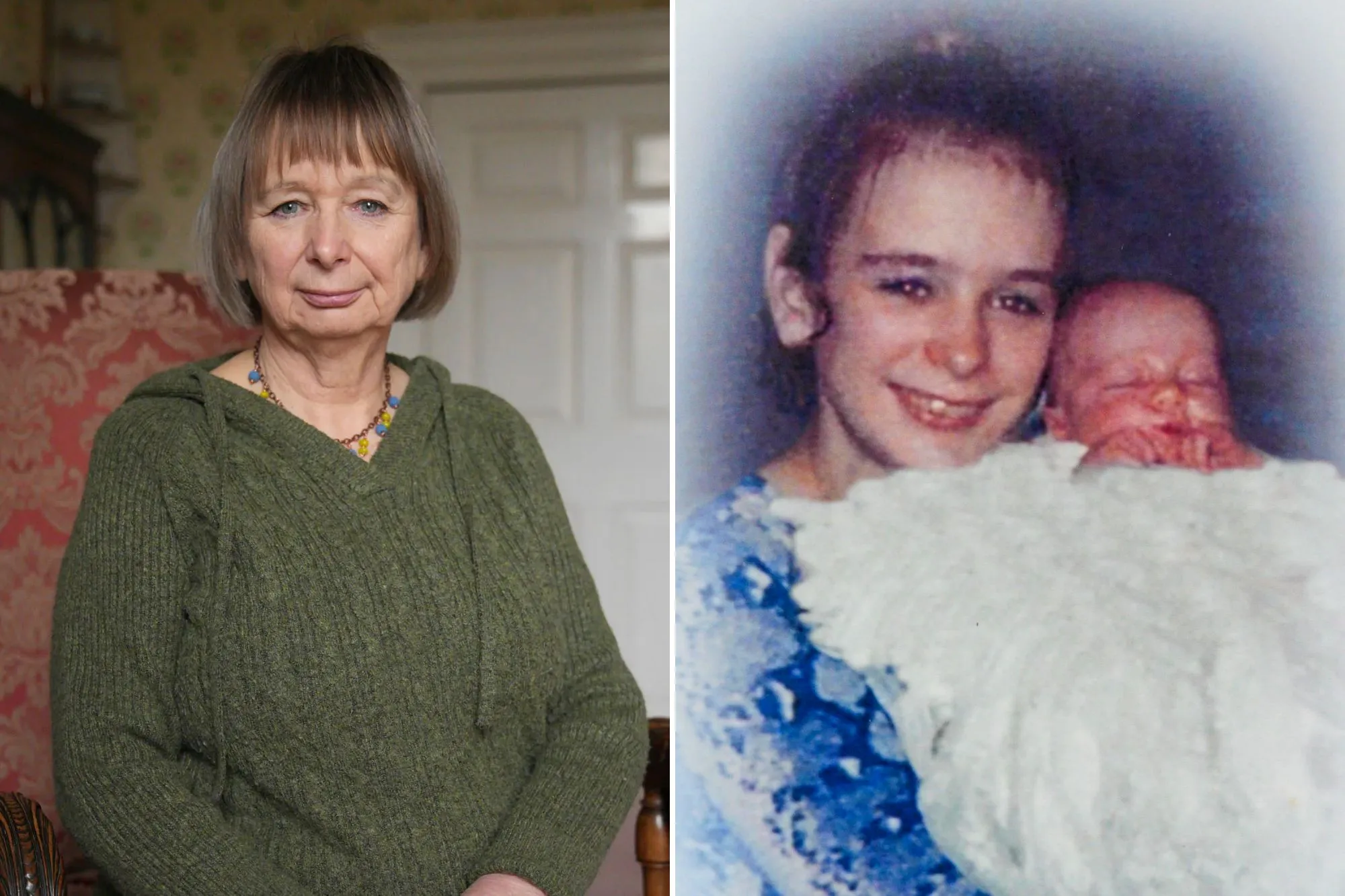
Michelle was made to feel shame around having a baby out of wedlockCredit: Supplied

Even now the memories of being separated from her baby are incrediblyCredit: Ian Whittaker
She was sent to a mother-and-baby home in Chepstow, Wales, found by her school, far away from her home and family in Bath.
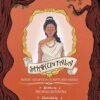
Michelle, who went on to write a book about her experience of forced adoption, titled Taken, remembers very little of her time there, which she puts down to amnesia caused by trauma.
Among her few memories is that last painful day with her baby son.
Michelle says: “I remember standing over the crib, and the sunlight streaming into the room. I was looking down at my tiny, beautiful son, absolutely distraught, and thinking, ‘This is the last time I’m ever going to see you’.”
The anguish, she says, was overwhelming.
“I believe most mothers would have given anything and everything to keep their child. I certainly would have,” she says.
“In my case, my social worker worked for the adoption agency, my questions on the availability of accommodation were left unanswered, and no one ever talked to me about any financial support.
“I was told fostering would not be good for the baby and the agency file describes me as deeply attached to ‘the baby’ but of ‘low moral standard’.
“Years later, I read how my baby was fostered after I left the mother and baby home, strengthening my conclusion that I only ever had the illusion of choice.
“Imagine for a moment what it would be like for you to be judged and labelled as an unfit mother simply because you were unmarried.
“Forced to give up your newborn baby to strangers with the expectation you would never see them again.
“Could you forget, move on with your life and pretend that nothing had happened, as we were told to do? I don’t think so.”
She has felt the impact of forced adoption throughout her entire life, and never stopped thinking about her son and never went on to have any more children.
Michelle says: “Although some children (like my son) were raised in loving homes, others were not.
“Irrespective of their upbringing, it cannot erase the significant trauma of maternal separation and the loss of their first family’s biological connections and personal history.
“For many, this leaves a permanent void in their sense of identity.
“Many adoptees discover decades later that they have relatives they never knew existed, grieving both the people and the lost moments that can never be recovered.
“Many mothers spend years yearning for their children, and adoptees spend years trying to understand where they came from and how this early separation has shaped their lives.
“While mothers bore the greatest burden of stigma and coercion, many fathers also lost children they loved and were denied the chance to parent.”
Michelle and her son, now known as John, now in his fifties, met in 2000, following a short correspondence.
After writing letters, and speaking on the phone, the two met in a private room at Jane Austen’s House in Hampshire.
They talked for two hours, enjoying an immediate connection, with their relationship continuing to this day.
Michelle says: “I am immensely proud of the man my son has become and the relationship we have both worked hard to build.
“As I have found myself, reunion can be joyful, painful, complicated and overwhelming all at once.
“Mothers and children may find a deep connection, but we also have to confront decades of missed experiences and the absence of a shared history.
“Even on simple things – how many parents have to ask their children if they take sugar in their tea or what they like to eat? – I had to ask my child.
“For me, the greatest tragedy of forced adoption is that even when reunions occur, they cannot restore the years that were lost.”
She continues: “Perhaps saddest of all (certainly for me), after looking after and being ‘mum’ to my son for four weeks, I was stripped of that title the moment he was taken.
“I was relegated to ‘birth mother’, with its connotation my role was over.
“As any parent will know, being a mum (or a dad) cannot be switched off just like a light switch. It is for life.
“While I do understand why my son and many other adoptees, quite naturally, see their adoptive parents as mum and dad, it is another loss that we as mothers have to manage and learn to live with.”
Discussing the upcoming apology, Michelle says: “In order to be truly meaningful, the formal apology needs actions to underpin its words.
“Both mothers and their children experience higher rates of depression, anxiety, trauma-related symptoms and other mental health difficulties.
“Chronic grief and trauma may also contribute to long-term physical health problems through the effects of sustained stress on the body.
“I think improved access to specialist trauma therapies and to records and information, plus support to navigate the complexities of reunion, are a bare minimum.”
As well as the Government acknowledging its role in forced adoption, she says the Churches must also “be honest about what has happened”.
The Church of England recently issued an apology, with the Archbishop of Canterbury, Dame Sarah Mullally, saying victims experienced “pain and trauma and suffering and fear when you should have received care and compassion”.
However, it came under fire from multiple organisations and individuals who felt it did not adequately express the harm done to the victims of forced adoption.
Michelle says: “My personal interest lies with the Catholic Church and its inadequate statement to date.
“This was not simply adoption. It was the forced separation of families through stigma, shame and discrimination.”
While the past cannot be changed, Michelle says: “An apology can never return what was taken. But it can acknowledge the truth, accept responsibility and drive change.
“If the Apology is delivered authentically and is backed up with effective actions, it will give us acknowledgement.
“Finally we will be heard and understood. This is an important part of the healing process.
“It will help us move away from the decades of pain and disenfranchisement and finally bring us to a place of validation, dignity and respect.”

 Trushali


 Michelle says being separated from baby Timothy has ruined her life