The prime minister told ITV News there is a ‘very strong case for an apology’, Social Affairs Correspondent Sarah Corker and Senior Producer Lottie Kilraine report
Sir Keir Starmer has said his “instinct” is to issue a government apology for the state’s role in the forced adoption scandal, in an exclusive interview with ITV News on Friday morning.
The prime minister admitted “my own view is there is a very strong case for an apology”, adding that he wants to make sure the government involves survivors in the process.
“I’ve asked the teams to speed up what we’re doing, I want to get this right with the campaigners and all those affected,” he added.
It comes as a cross-party committee of MPs said on Friday that the government must issue a formal, unqualified apology to survivors of forced adoption who have “suffered for too long”.
In post-war Britain an estimated 250,000 unmarried women were sent to institutions run by religious organisations and the state, where they were pressured and coerced to put their babies up for adoption between the 1940s and 1980s. Other infants died through poor care.
The practice caused “unimaginable trauma” for generations of women and left “profound, often devastating impacts” on their children, the Chair of the Education Committee, Helen Hayes, said.
The committee has called for the government to commit to an apology for the state’s role in the scandal, with MPs saying the matter must be treated with urgency “given the advancing age of those affected”.
The damning report comes after an ongoing ITV News investigation has laid bare the trauma and neglect faced by both mothers and their children, now adults, many of whom are still searching for answers or have since died.
Sir Keir Starmer told ITV News ‘his instinct’ is to issue a government apology for the state’s role in the forced adoption scandal
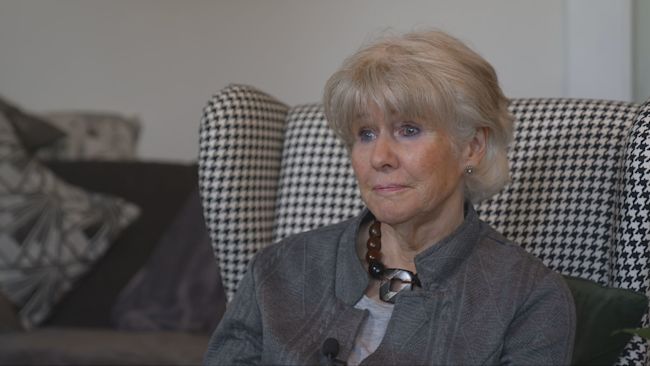
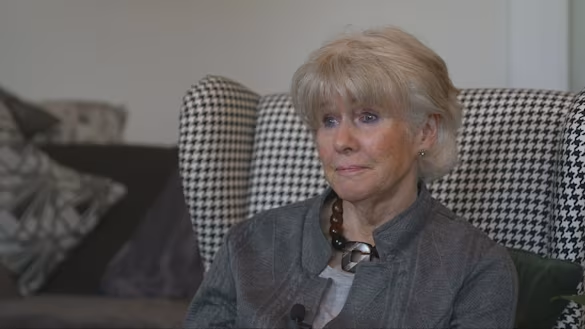
Ann Keen, a former Labour MP and nurse, whose only child was taken from her in 1966 recalled having “no dignity” or say over what happened to her at a mother and baby institution in Swansea.
When asked by MPs why an apology matters, Ms Keen said “it would mean the world” to her because “I still blame myself”.
“I want this apology to clear not only my name, but that of my son, because I did not give him away,” she added. “My son did not know he was adopted until he was 27 years old.”
Ann Keen, whose baby was taken from her in 1966, recalled being treated with ‘no dignity’.Credit: ITV News
Adult adoptees have described being seen as a “solution” for their adoptive parents.
It took Debbie Iromlou, who is a transracial adoptee, nearly 40 years to trace her birth family – a journey which took her halfway across the world.
Growing up in Suffolk in the 1960s and 1970s, she had no idea that the mother raising her was not her biological mother.
It was only when Debbie turned 16 and her foster mother had made a request to formally adopt her that the truth came out.
“There was no safeguarding,” she told MPs. “Nobody came to check on us, and neglect and abuse in adoptive families was common.
Debbie Iromlou, who gave evidence to MPs earlier this month, spoke to ITV News last year about her childhood and adoption
“Local authorities had warned them that my foster mother – soon to be adoptive mother – was not fit to take children in. They ignored those recommendations, and I was left there anyway.”
Giving evidence to the committee, Dr Michael Lambert of Lancaster University said that “coercion was baked into the entire system”.
He characterised the system as one “designed to supply infants to adoptive families”, rather than to support mothers in making a genuine decision about the future of their baby.
Successive governments have previously said the state wasn’t directly involved in these practices but ITV News has seen evidence in official files that they were funding, through local health authority grants, 171 homes across England.
Last year, we revealed nearly 200 infants who died at eight mother and baby homes are buried in mass plots in ten different cemeteries across England.
To this day, families are still searching for their lost children connected to these post-war institutions.
A formal apology is essential in order to correct the public record, address previous misrepresentations and reduce the burdens felt by many mothers and adoptees, the committee found.
It has urged the government to work “as quickly as possible” and commit publicly to a clear timetable for developing and issuing its apology.
‘We want the apology to lead to meaningful action for survivors,’ Helen Hayes, the Chair of the Education Committee, told ITV News
Earlier this month, children and families minister Josh MacAlister confirmed an apology for the state’s role in historical forced adoption was being “actively considered” by the government.
The Education Committee’s report said an apology should cover a wider period “as we have received clear evidence that the practices associated with forced adoptions happened before 1949 and continued after the introduction of the Adoption Act 1976”.
In his evidence to the committee, Mr MacAlister said he accepted “the state had a role” in “a practice that went on for decades, forcibly removing children from these women in homes that were sometimes run by the state, enabled and overseen by social workers employed by the state, and social attitudes that were reinforced by practices that carried on for many years”.
Other countries where forced adoption took place, including Canada, Australia, Republic of Ireland, Northern Ireland, Scotland and Wales, have already issued a formal government apology, and in some cases set up redress schemes.
Rosemundy Mother and Baby Home in St Agnes, Cornwall, pictured in the 1950s.Credit: ITV News / Supplied
Ms Hayes said an apology must be co-produced with survivors, “ensuring it reflects their experiences, and it should commit to offer survivors meaningful support beyond the apology itself, including better access to records, trauma-informed healthcare and regular consultation with the government”.
The committee chair said a formal apology is an “essential step” towards “delivering the peace survivors deserve”.
“Survivors have suffered for far too long,” Ms Hayes added. “They simply want to move on with their lives.”
However, the review stopped short of recommending financial redress for survivors.
It did call on the government to carry out a “rigorous assessment” of how other governments around the world had handled the issue “with special attention to the redress mechanisms introduced in Australia, Northern Ireland and the Republic of Ireland”.
MPs have also called for improved access to records for adoptees and mothers, and access to trauma‑informed support for those navigating contact and reunion with their families.
There needs to be a clear legal duty on record-holding institutions to maintain and securely store their records, and new guidance to local authorities to improve those seeking information about their records, MPs said.
The review urged that a trauma-informed health pathway for all those affected should be developed, including improved access to psychological support and national clinical guidance recognising the heightened prevalence of complex post traumatic stress disorder (PTSD) and suicide risk among survivors.
A government spokesperson told ITV News: “This abhorrent practice should never have taken place, and our deepest sympathies are with all those affected.
“We take this issue extremely seriously and continue to engage with those affected to provide support.”
If you have been affected by the issues in this report, please visit these links for help and support:
PAC UK– Specialist therapy, advice, support, counselling and training for all affected by adoption and permanency
The Diocese of Winchester has issued an appeal for information, find out more on their website here
Safe Spaces – an independent service offering confidential support to survivors of Church-related abuse on 0300 303 1056 or on their website
Samaritans is an organisation offering confidential support for people experiencing feelings of distress or despair. Phone 116 123 (a free 24-hour helpline)

 Trushali