A new baby holds the finger of its mother. Stock Image
Her original birth certificate carried her mother’s name, but the space for her father had simply been crossed through.
“At the time, people like me were still legally known as ‘bastards’. It was devastating.”
Sian has spent decades searching for answers, eventually tracing her birth mother and meeting her in Liverpool when she was 25 – exactly the same age her mother had been when she gave birth.
“The first thing I did was thank her for not having an abortion,” she said.
The meeting lasted little more than an hour. Her birth mother, now married with another family, made it clear she couldn’t have a relationship with the daughter she’d been forced to give away.

KentOnline columnist Melissa Todd
But she also admitted she’d never wanted to part with her baby. Her own mother, and the Church, insisted.
“I’ve forgiven her completely,” Sian says. “My faith has helped. But also, it was a totally different time. There was so much stigma attached to unmarried mothers, and so little help. She was under enormous pressure.”
That capacity for forgiveness, and faith, seems remarkable given Sian’s own childhood. Raised in what she describes as a highly institutionalised Salvation Army household, church dominated family life.
“We were there at least five times a week,” she explains. “It was a Dickensian existence. The women still wore bonnets. I played the tambourine – I’ve never met anyone who plays tambourine as well as me, so I suppose I got something out of it.”
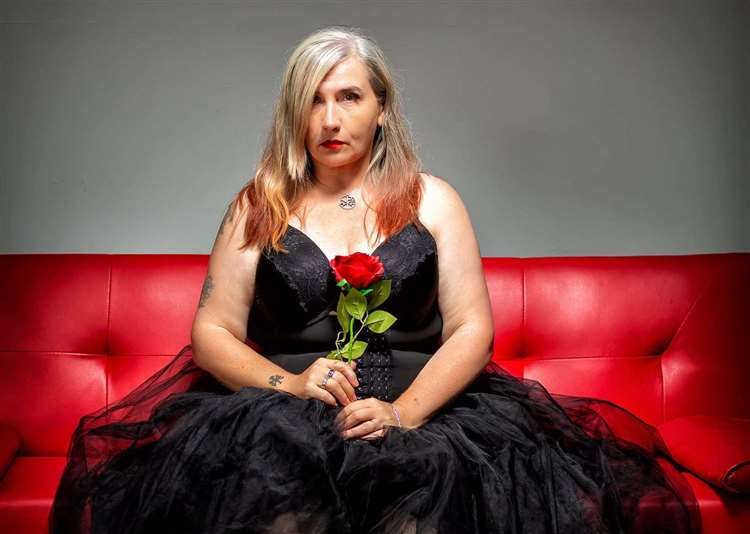
Humour has become one of her ways of making sense of profound loss. Performing as “Space Girl”, she has transformed some of her experiences into comedy, poetry and theatre.

Sian was put up for adoption just months after her birth. Stock Image
Sian is also a survivor of childhood abuse. “There was no safeguarding, insufficient checks on who was looking after me. I thought I was just unlucky, but speaking to other survivors I’ve discovered it was actually pretty common.
“The wider family wasn’t checked before a child was placed.
“I was a foster parent myself, and the checks take nine months. That’s how long it takes to make a child, after all.”
Sian was also subject to an exorcism when she was twelve, without her consent, to rid her of her demons.
“My adoptive family could choose a child by their looks, and requested a baby with brown hair and brown eyes.

Columnist Melissa Todd
“I was told that when they arrived at the home there were rows of prams, filled with babies. I was three months old. They picked me because I was crying.”
Despite all this, Sian’s Christian faith has survived. Today she works as an independent chaplain and undertakes survivor engagement consultancy work with the Church of England, helping others affected by historic abuse and adoption practices.
That makes the recent apologies from both the Government and the Church of England particularly significant. She welcomes them, but says their words weren’t enough, particularly those from the new Archbishop of Canterbury, Sarah Mullally.
More importantly, apologies alone can’t fix what was irrevocably broken.
“I’m 56 now,” she told me. “It’s taken decades for people to acknowledge what happened.”
She believes adoptees need quicker access to their records, specialist counselling and greater recognition of the lifelong impact of forced adoption. She also wants the Salvation Army, a Methodist Christian church and an international charitable organisation, to apologise for its own historic role.
“I’m not looking for financial compensation,” she said. “You can’t put a price on what happened to us. We’ve lost our families, our tribe, and they’ve lost us. I want more support for survivors, more acknowledgement of all we’ve endured.”
A Salvation Army spokesperson explained that the organisation has expressed how sorry it is to the mothers and their children who were in its care and who they let down. The spokesman added that an initial apology was issued a number of years ago and it can be found on their website here.
The spokesperson said: “The Salvation Army ran mother and baby homes with the intention of caring for vulnerable women and children but we know that there were people in our care whom we let down. For that we have expressed publicly how profoundly sorry we are.
“We are deeply saddened to hear of the traumatic experiences that some mothers endured in the care of The Salvation Army; the hurt of which they still carry.
“We are grateful for those who feel able to share their painful stories as this helps shine a light on a time in our past when we failed to provide the support and care that vulnerable mothers needed and deserved.
“We welcome the various processes and inquiries underway to understand more about how women and their children were treated.”
Sian has since traced one of her younger brothers, discovering uncanny similarities in their personalities, voices and even their love of swimming.
“We immediately saw ourselves in each other,” she says. “This is something I hear so often from other adoptees. That immediate, almost visceral sense of belonging.”
Her forthcoming memoir, Spare Kidney, promises to tell that story in full. But for now she’s continuing to campaign and fight for other survivors of forced adoption.
While apologies matter, they’re only the beginning. For people like Sian, whose identities were rewritten before they could even speak, healing is not measured in headlines, but in finally being heard.

 Trushali