The Delhi High Court was hearing the plea of a couple who adopted a child in 2019, but were facing a challenge in relocating the minor from India to Canada.
The foreign agency informed the couple that in the absence of the requisite No-Objection Certificate from CARA, the petitioners’ application could not be processed. (Image generated using AI)
Delhi High Court news: In a matter involving a minor girl adopted by an Indian citizen woman and her husband, a Canadian citizen, the Delhi High Court recently directed the adoption authority to issue a No-Objection Certificate (NOC) for the purpose of the child’s relocation to Canada, observing that adoptive parents cannot be left “in the lurch” by the authorities.
Justice Sachin Datta was hearing the plea of a couple seeking an NOC from the Central Adoption Resource Authority (CARA) to relocate their adopted minor child from India to Canada.
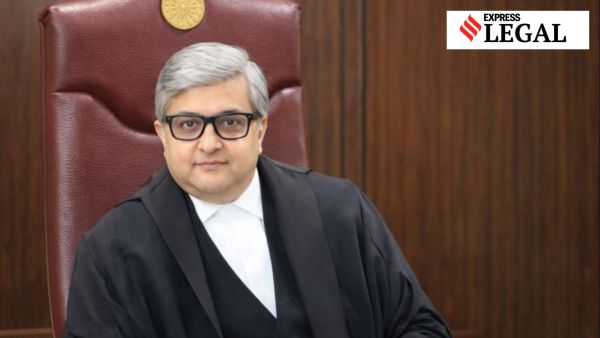
Justice Sachin Datta directed CARA to appropriately liaise with the Canadian authorities.
“It would be wholly contrary to the purport of the express language of the 2021 Regulations (Adoption (Amendment) Regulations, 2021), as also the 2022 Regulations (Adoption Regulations, 2022), to leave prospective parents in the lurch, despite the fact that the adoption under HAMA, 1956 (Hindu Adoption and Maintenance Act, 1956) stood completed prior to the commencement of the 2021 Regulations,” the April 20 order read.
Couple, adoption and relocation
It was placed on record that the minor child was born in March 2018 and was adopted by the couple in accordance with Sikh customs in September 2019. A passport was issued in the name of the child in September 2019.
In March 2019, the adoptive parents approached Cornerstone Adoption Agency of Canada (the foreign adoption agency) for the purpose of relocating their adopted child to that country.
An adoption deed was executed under the Hindu Adoption and Maintenance Act, 1956 (HAMA) in February 2021. Following this, the Office of Civil Surgeon Moga issued a birth certificate in the name of the minor in July 2021, recording the petitioners as the adoptive parents.
HAMA is a personal law that allows adoption among Hindus in India and governs the validity of such adoptions. However, when adoptive parents wish to take the child abroad, the process is regulated by the Adoption (Amendment) Regulations, 2021, and the Adoption Regulations, 2022, which lay down the procedure for inter-country adoption and relocation.
These regulations are implemented by CARA and are aligned with India’s obligations under the Hague Convention, ensuring that the child’s relocation is legally recognised and in their best interest.
Matter takes a turn
The couple initiated the procedure to relocate the minor to Canada. Following this, the district magistrate concerned furnished a verification report and a family background report.
In December 2022, CARA issued a ‘support letter’ in the petitioners’ matter. Subsequently, in October 2023, the Foreign Adoption Agency in Canada communicated to the wife that the CARA portal reflected the relocation application of the child as “application rejected” with the remark that “the matter cannot be taken up” as it is related to HAMA.
The foreign agency further informed the couple that in the absence of the requisite NOC from CARA, the petitioners’ application could not be processed.
Aggrieved, the couple filed an application in December 2023 under the Right to Information Act, 2005 (RTI Act), seeking information regarding the status of the said relocation application before CARA. The application, however, got rejected.
Thereafter, the couple addressed a legal notice to the head of the adoption authority in India, which, however, elicited no response.
Court’s findings: No objection from CARA
- The Delhi High Court clarified that the regulatory framework expressly covers situations where adoptive parents, after completing a valid adoption under HAMA, seek to relocate the child abroad.
- It is untenable for CARA to abdicate its responsibility by issuing a mere support letter instead of pursuing the matter with the concerned authorities of the recipient state and issuing an NOC upon conclusion of such formalities.
- It is incumbent upon the concerned authorities in both the state of origin and the receiving state to cooperate in the paramount interest of the child’s welfare.
- CARA is under an obligation to pursue the matter with the Canadian authorities so as to ensure that all the regulatory requirements in the receiving state are complied with.
- Instead of clarifying the correct legal position to the Canadian authorities, CARA failed to respond to the communication received in March 2023.
- The Delhi High Court directed CARA to appropriately liaise with the Canadian authorities and also convey the regulatory and statutory position.
- There is no objection on behalf of CARA as regards the validity of the adoption, it noted.
- This position should be made clear to the Canadian authorities, with the request to expeditiously conclude the exercise as provided under the Hague Convention.
Undermines ‘best interest’ of child
Appearing for the petitioner, senior advocate Nandita Rao argued that once the verification report was furnished by the district magistrate, CARA was bound to comply with the provisions.
It was contended that the adoption under HAMA, being a valid statutory adoption recognised under Indian law, cannot be disregarded. The refusal of CARA to issue an NOC undermines the principle of the best interest of the child, which is paramount in matters of adoption and relocation.
Support letter only permissible action
Central government standing counsel Arunima Dwivedi, on the contrary, submitted that the adoptive parents failed to comply with the procedural requirements under the relevant regulation, including submission of the requisite certificates.
It was further submitted that CARA’s jurisdiction is confined to adoptions processed under the Juvenile Justice (Care and Protection of Children) Act, 2015 and the adoption regulations framed and that adoptions effected under HAMA will fall outside its purview.
Therefore, in the absence of CARA’s authority to issue NOC in respect of such adoptions, issuance of a support letter was the only permissible course of action, the counsel argued.


 Trushali