To sweeten the deal, the recruiters allegedly provided between nine million and 15 million rupiah (between US$530 and US$880) to parents.
“The number of babies recruited by the defendants reached 34,” prosecutor Billie said.
All the babies are from the Bandung area in West Java.
According to court documents, the babies were then reportedly offered to the Singaporean individual Petter who in turn looked for Singaporean couples willing to adopt them.
The syndicate also allegedly recruited fake birth parents or guardians in case potential adopters from Singapore wished to have video calls.
According to court documents, Singaporean adoption papers were prepared for at least 10 babies using fake identities and forged birth certificates.
The 10 babies entered Singapore between 2023 and 2025, allegedly taken by five of the defendants who posed as their birth parents or guardians.
Sukanda, the lead prosecutor in the case, earlier told reporters that those whom the syndicate could not sell to Singapore were allegedly sold to Indonesian parents.
“Those without a buyer were given up to an orphanage,” Sukanda said last week.
All 19 defendants – who are aged between 26 and 70 – are facing the same charges: recruiting, transporting or harbouring another person for the purpose of exploitation under the Indonesian Criminal Court as well as trafficking an Indonesian person out of the country for the purpose of exploitation under the country’s Human Trafficking Law.
Under the charges, the defendants are facing a minimum sentence of three years and a maximum of 15 years in prison each if convicted as well as a fine of between 120 million and 600 million rupiah.
Lily’s lawyer Sendi Sanjaya said his client was only helping hopeful parents find babies to adopt “out of kindness”. Lily was earlier accused by police as the ringleader of the syndicate.
“We reject the notion that she is an agent or a broker let alone the mastermind of a criminal enterprise,” the lawyer told reporters. “We will prove that some portions of the indictment are not based on facts.”
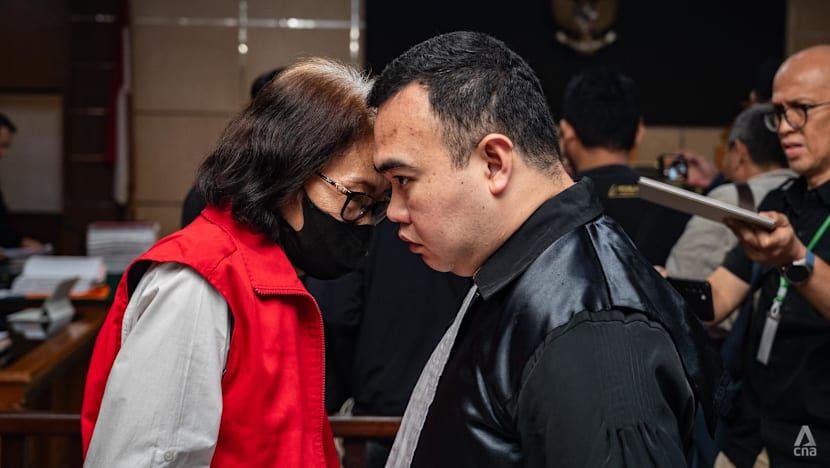 Lie Siu Luan, one of the defendants in a baby trafficking case speaking with her lawyer Sendi Sanjaya after a trial on Apr 7, 2026. (Photo: CNA/Wisnu Agung Prasetyo)
The group was supposed to be tried last week, but the trial was postponed by a week after judges from the Bandung District Court decided to give some defendants more time to lawyer up.
During last week’s trial only four of the 19 defendants had lawyers present. On Tuesday, eight defendants independently appointed lawyers of their own while the rest were represented by a court-appointed lawyer.
The court will start hearing witnesses’ testimonies on Apr 14.
The alleged syndicate members were arrested in mid-July last year during a series of near-simultaneous raids across Bandung – where the babies originated – as well as Jakarta and Pontianak, the capital of West Kalimantan, where the infants were kept in safe houses while in transit.
Two additional suspects remain under police investigation and have yet to stand trial, while three other alleged members of the syndicate are still at large, according to West Java police spokesman Hendra Rochmawan.
The case has made the news in Indonesia and Singapore.
In Indonesia, many expectant mothers struggle to afford prenatal care and the costs associated with childbirth and raising a child.
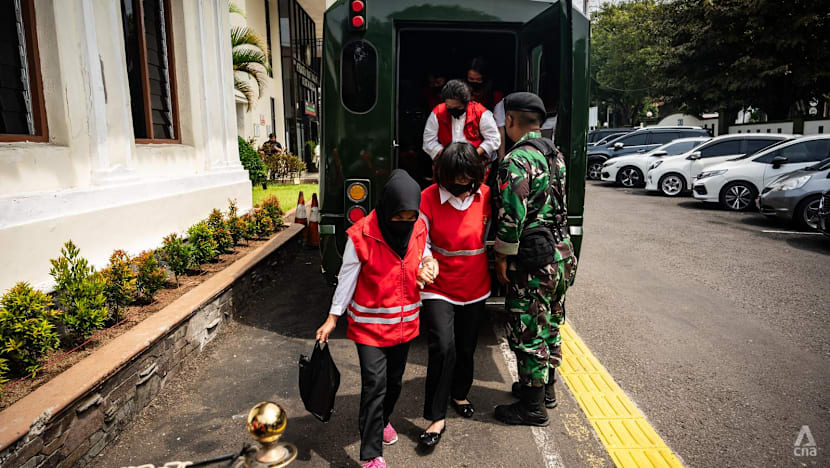
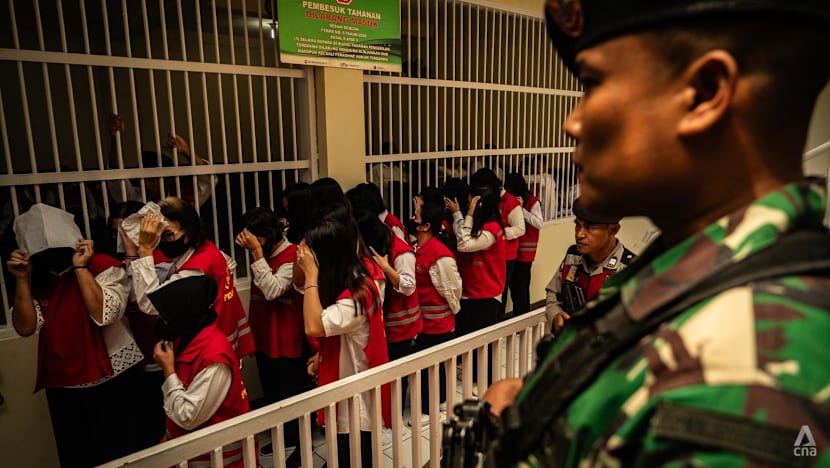 Defendants of a baby trafficking case being escorted out of their holding cells at the Bandung District Court, West Java on Apr 7, 2026. (Photo: CNA/Wisnu Agung Prasetyo)
Experts have told CNA that while poverty remains the biggest driver of the trade, the problem is compounded by deep social stigma surrounding abortion and widespread misunderstanding of how the legal adoption process works
Social media has further enabled the trade, allowing syndicate members to connect directly with potential birth mothers and adopters across provinces and even national borders.
Singapore’s Minister for Social and Family Development Masagos Zulkifli said in February that agencies were working closely with the relevant Indonesian authorities on the matter.
“When the facts are clearer, the Ministry of Social and Family Development will review whether existing adoption processes should be enhanced,” he said in a written response to a parliamentary question.
In January, Singapore’s Minister of State for Social and Family Development Goh Pei Ming said the country was working closely with relevant agencies to ensure all inter-country adoptions comply with strict legal requirements at home and in the babies’ countries of origin.

 Trushali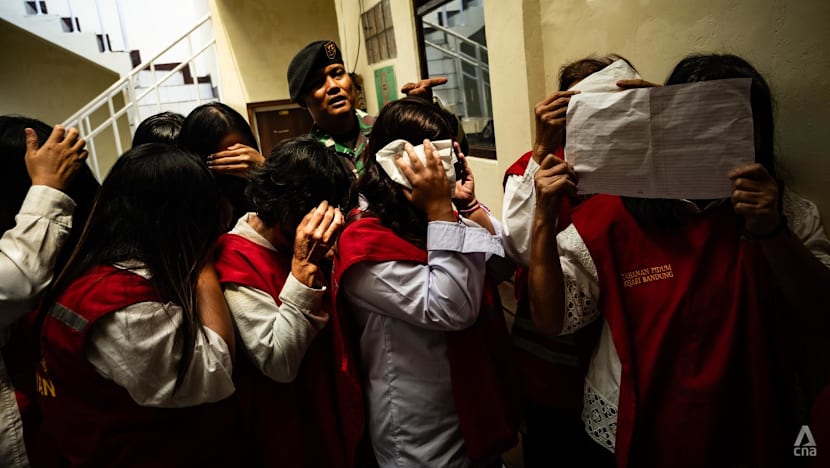
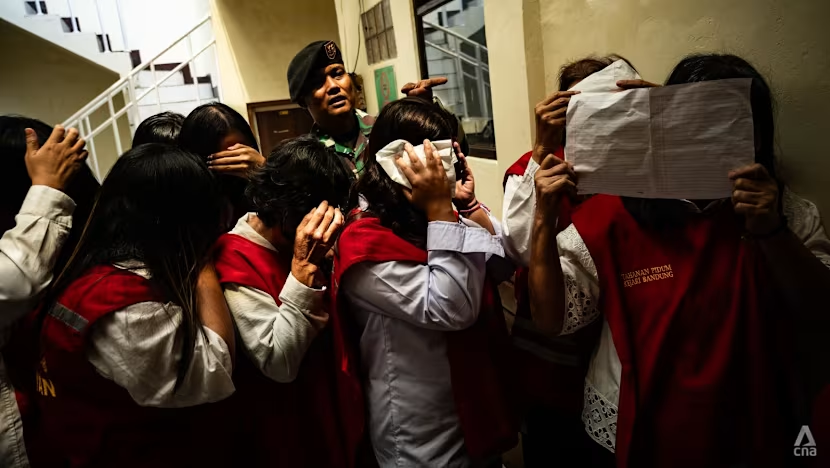
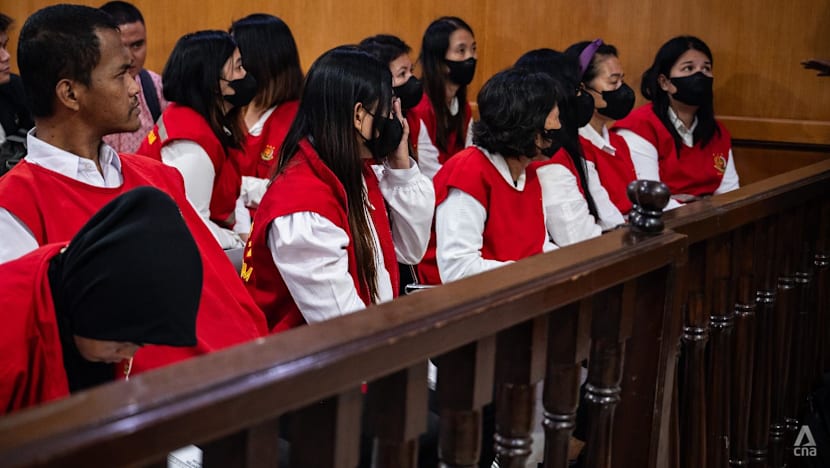 Members of the alleged syndicate at their joint hearing at the Bandung District Court in West Java on Apr 7, 2026. (Photo: CNA/Wisnu Agung Prasetyo)
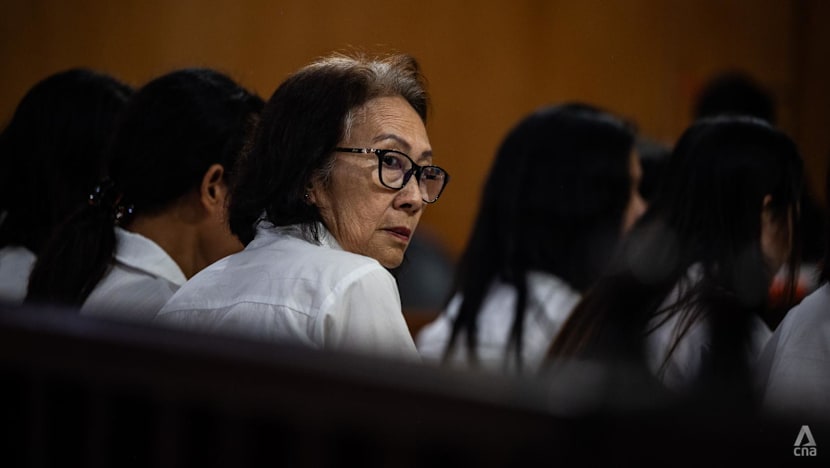 Lie Siu Luan, also known as Lily, one of the defendants of a baby trafficking case heard by the Bandung District Court, West Java. (Photo: CNA/Wisnu Agung Prasetyo)