YOUR CART
- No products in the cart.
Subtotal:
£0.00
BEST SELLING PRODUCTS
 Trushali
When pregnancy isn’t possible: one woman’s journey through surrogacy – Voice Online
Written by: Staff Writer
19th March 2026
Fisiwe Muvirimi recounts her journey to becoming a mother through surrogacy, a path rarely discussed in the Black community, confronting stigma and uncertainty before celebrating the long-awaited arrival of her daughter
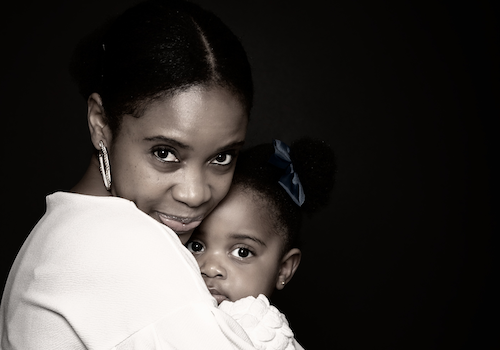
Fisiwe Muvirimi holds her daughter shortly after birth, a moment she describes as “surreal” after years of fertility challenges (Pic: supplied)
IN MANY families, motherhood is spoken about as if it follows one clear path: pregnancy, birth, baby. However, for many women, the journey is not that straightforward. In 2018, my husband and I were advised by a gynaecologist that the best chance of having a child would be through surrogacy.
Prior to this devasting news, I had undergone investigative scans and tests which revealed that I had developed extensive scar tissue in my uterus and a thin endometrium lining. This was all attributed to my history of having undergone three fibroid surgeries.
Although I subsequently underwent a hysteroscopy surgery to remove the scar tissue, and took oestrogen to increase my uterine lining, this did not appear to make a significant difference.

Physiotherapist Fisiwe Muvirimi shares her deeply personal journey to motherhood through surrogacy (Pic: supplied)
As a result, I was advised that trying to conceive naturally would be challenging and that If we were to go through IVF, there was a high chance that I would experience recurrent implantation failure.
Furthermore, even if I were to fall pregnant, I was made aware that I would not be able to carry a baby to full term and would also be at a high risk of experiencing a ruptured uterine.
The consultant strongly recommended we consider surrogacy.
Receiving this news was one of the worst days of our lives. My mind was clouded by a range of emotions from overwhelming distress and sadness to shock and confusion.
I felt frustrated with my body and experienced deep and profound grief for the loss of my inability to carry a child.
We had not known of anyone that had gone through IVF let alone surrogacy. I desperately searched online for stories similar to ours and for support to help me come to terms with the diagnosis.

Fisiwe Muvirimi with her surrogate (Pic: supplied)
However, I had difficulty finding any sources of support that I resonated with and were I felt represented as a black woman.
Sadly, in Black communities, reproductive health and fertility issues are not spoken about freely and continue to be stigmatised.
My husband and I confided in our immediate family members who were immensely supportive, but nothing could have prepared us for the emotional, financial, mental and social challenges we were going to experience on this journey.
We considered applying to join the Surrogacy UK organisation, however due to the long waiting times to be accepted at the time, we chose alternative options.
After much research and consideration, including attending a surrogacy event in London, where they had hosted gynaecology consultants from various clinics such as the USA, Cyprus, Greece and Ukraine, we decided to embark on a surrogacy journey with a clinic in Greece.
Gestational surrogacy is the journey we embarked on were the surrogate carries the embryo and she is not genetically linked to the baby. This required going through IVF using our eggs and sperm, and four embryos were created and subsequently frozen.
We were introduced to our surrogate for the first time in June 2020 and this was one of the highlights of our journey.
The moment was a mixed bag of emotions as we felt nervous, anxious and excited all at the same time.
Two embryos were transferred to our surrogate at the initial transfer but unfortunately this ended in a miscarriage after four weeks.
At the second attempt, one embryo was transferred but it failed to implant. Both attempts delivered a severe blow to any hopes of a successful pregnancy. When the final embryo was transferred, months later, the two weeks wait for results was a stressful time.
We were elated when we received a positive pregnancy result but remained cautiously excited given the previous failed attempts.
On 24th February 2022 was the birth of our precious baby girl. It was a surreal moment. Beautiful memories of holding her in my arms for the first time, feeling her warm body against my chest, hearing her breathing and feeling her heartbeat, will forever be imprinted in my heart.
Fertility challenges are more common than we openly discuss. Yet in our communities, these conversations are often whispered, if they happen at all.
If you are considering surrogacy, adoption, donor conception, or another path to parenthood but feel hesitant, know this: you are not “less than” because your journey looks different. Motherhood has more than one door.
Hesitation is natural. Cultural expectations, faith, family opinions and fear of judgement can weigh heavily.
You may wonder, what will people say? You may struggle with grief over the path you imagined. Both can exist at the same time as hope.
If you are exploring surrogacy or alternative options, seek accurate information. Speak to a fertility specialist. Understand UK legal frameworks around surrogacy. Connect with reputable organisations and support groups. Knowledge brings clarity and confidence. The Fertility Network UK Black Women’s Group is a tremendous source of support.
Just as important is protecting your mental health. This journey can stir grief, shame and isolation. Therapy, coaching, faith leaders and trusted community spaces can provide grounding and strength.
There is no single definition of motherhood. It is not measured solely by biology, but by love, nurture and presence.
Your story, however it unfolds, is valid. In sharing it, you may give another woman permission to hope, to breathe and to choose the path that brings her peace.
Also remember that your self-worth is not predicated on your ability to conceive or carry a baby.
If you would like more information about surrogacy you can contact the Black Women’s Group at Fertility Network UK, via email: blackwomensgroup@fertilitynetworkuk.orgFisiwe Muvirimi is a physiotherapist who delivers specialist workshops on pelvic health to support women with reproductive health conditions or challenges. You can reach her at: fisiweguga@gmail.com